
Limoges and its large kind of exceptional ceramic pieces
Prof. Francesco Carelli
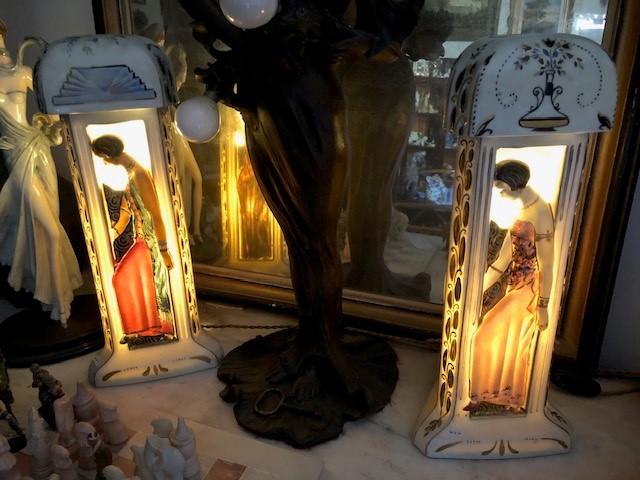
– Limoges – signed Berchond
Limoges porcelain is hard-paste porcelain produced by factories in and around the city of Limoges, France, beginning in the late 18th century, by any manufacturer. By about 1830, Limoges, which was close to the areas where suitable clay was found, had replaced Paris as the main centre for private porcelain factories, although the state-owned Sèvres porcelain near Paris remained dominant at the very top of the market. Limoges has maintained this position to the present day.
Connoisseurs appreciate the radiant white colour and the unmistakable luminosity of Limoges porcelain. The porcelain owes these characteristics to the high-quality kaolin found in the region. Also known as China clay, the coveted mineral is largely responsible for the colour of the porcelain. The finer the kaolin, the lighter the colour of the porcelain – just like the pure porcelain from Limoges.
Limoges porcelain is hard-paste porcelain and therefore exceptionally durable. Hard-paste porcelain has a kaolin content of up to 50% and is fired at extremely high temperatures of over 1400 °Celsius. At such high temperatures, the ceramics become dense, non-porous, completely waterproof, and particularly resistant to mechanical impact.
Each Wild Animal Limoges box is an original work of art, depicting a different species of wildlife in detail. Safari Animal porcelain figurines are also meticulously crafted, with intricate features and realistic poses that capture the essence of each creature. A menagerie of mammals, lions, tigers, elephants, marsupials, alligators, rhinos or hippos, tucanos or beavers.