

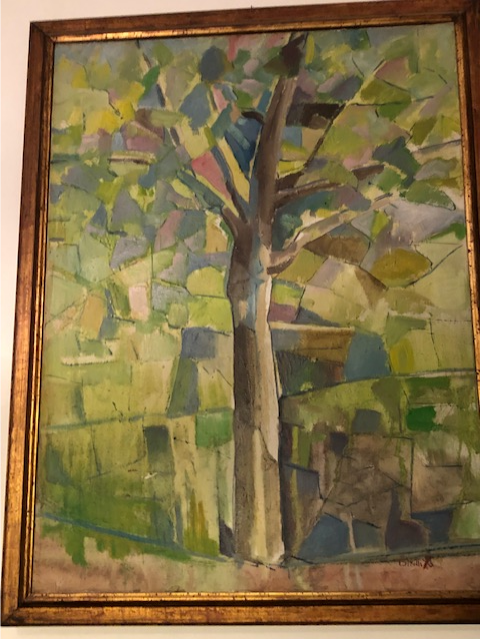
Renato Birolli, from Expressionism to post-Cubism
Prof. Francesco Carelli
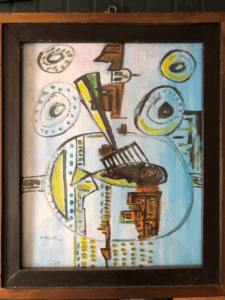
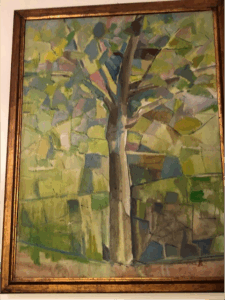
Renato Birolli was born in Verona in 1905. He joined various art groups. This was a five-year period in which he frequented such artists as Manzù and Sassu, Mafai and to come into contact with the Scuola Romana group. After that, Birolli went to Paris for the first time where he discovered the painting of Van Gogh, Cézanne and, more generally, all the stimuli that Paris could offer. 1938 was the year that marked a turning point, because Renato Birolli became the prime mover of the Milanese Movement “Corrente”, and became involved with cultural activities promoted by the magazine of the same name.
He exhibited in group and solo shows held, from 1940 onwards, at the Bottega di Corrente gallery, which in a few years was to change its name to Galleria della Spiga. During this period, he became friend with Guttuso, Migneco, and he began to frequent the Hermetic poets. After 1936-37, colour maintained its dominant role in his compositions which were increasingly clear and structurally strong.
In 1946, Birolli began to frequent Santomaso, Vedova; on October the first of the same year he signed the Manifesto della Nuova Secessione artistica which marked the foundation of the “Fronte nuovo dell’arte”, the first exhibition of which took place at the Galleria della Spiga in 1947.
From 1947 to 1949 he often went to France, to Paris and Brittany. The paintings from this period marked his definitive abandonment of the Van Gogh-inspired Expressionism that had characterised his “Corrente” period; he now began to deal with post-Cubist themes derived from post-1930s Picasso. His greatly reduced colour range bordered on monochrome, something unusual in his work.
In about 1950, there began to be formed the “Gruppo degli Otto”, that was involved in a mutual search for a supranational art.
From 1950-51 onwards the nature and characters of the places chosen by the artist for his portraits became the exclusive source of inspiration for his paintings, now fully demonstrated his “abstract-concrete” aims in which the evocative power of colour and the search for a formal balance of the abstract elements had a predominant role.