
Scientists succeed in improving the analgesic efficacy of morphine
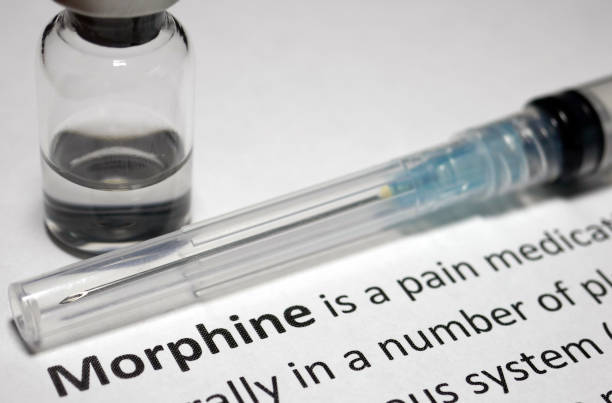
Scientists from the Cell Biology area of the University of Malaga have taken another step in the search for a more effective therapy for the treatment of pain with a new work in which they continue to advance in the way of mitigating the addictive effects of morphine – one of the main drugs for this – and also, the development of analgesic tolerance to it.
Specifically, they have identified that activating a dopamine receptor, D4, enhances its analgesic effect, while also preventing the development of tolerance to this medication. The results of this work have been published in ‘The Journal of Pain’ , one of the leading international journals in the field of pain medicine and science.
“Our research group has been addressing the addictive aspects of morphine for more than 15 years, while its dimension on analgesic tolerance is a more recent line of research,” says Alicia Rivera, professor at the Faculty of Sciences of the University of Malaga (UMA), one of the authors of this study.
The expert also points out that making progress in reducing its impact at the intestinal level, especially related to the severe constipation problems it causes, is another line of future study.
Pharmacologist Diana
Rivera explains that morphine remains one of the best painkillers in modern medicine. “However, its continued use can lead to problems such as dependence and loss of effectiveness, as well as the aforementioned issues of constipation and decreased cardiorespiratory function.”
Precisely for this reason, it is necessary to find an effective therapy with the fewest possible side effects, explains the researcher from the University of Malaga, who points out that one of the strategies could be to use a drug that, combined with morphine, would avoid these unwanted effects.
The scientific team from the University of Malaga (UMA), also belonging to the IBIMA Bionand Platform, proposes using the dopaminergic system, in particular the D4R – a little-studied brain and spinal cord receptor – as a possible complementary pharmacological target to morphine, “which would achieve a safer pain therapy.”
Still in its initial phase, the research has so far been conducted in experimental models, so its translation into successful treatments in humans still needs a long way to go.
Neuronal ‘brake’
“What we have achieved is a possible way to make morphine remain effective for longer, without having to increase the doses progressively and without increasing the risk of tolerance or hypersensitivity to pain,” says the professor from the University of Malaga, confirming that these effects, therefore, in addition to depending on the opioid drug itself, are also conditioned by adaptive changes in the nerve circuits of the spinal cord.
Thus, according to the expert, the D4 receptor would act by reinforcing inhibitory signals in the spinal cord as a kind of ‘brake’ system that would prevent the pain circuits from entering a state of overexcitation.
Multidisciplinary team
Led by the UMA R&D group ‘IREM’, in this study, which arises in the context of Marina Ponce’s doctoral thesis, researchers from the Malaga institution of the Department of Zoology and the Department of Human Physiology of the Faculty of Medicine have also participated, as well as a professor from the International University of La Rioja (UNIR).
María Ángeles Real, Adrián Ruiz, Belén Gago, Iván Fatuarte, Mireya Moreno, Ismael Aranda, and Carolina Roza are the other authors of this multidisciplinary research.
Video: https://youtu.be/1x0UTWRVY-Y?si=r0TQAfnS11_UWGzo
https://www.uma.es/sala-de-prensa/noticias/cientificos-de-la-uma-logran-mejorar-la-eficacia-analgesi…
Complete bibliographic information
Published on 07/09/2026 by University of Malaga
Authors: Ponce-Velasco M, Real MÁ, Ruiz-Villalba A, Gago B, Fatuarte-Juli I, Moreno-Ruiz M, Aranda-Bravo I, Roza C, Rivera A.
About: Dopamine D4 receptor activation preserves morphine analgesia and attenuates tolerance by enforcing inhibitory spinal tone in rats. J Pain. 2026 May 5;45:106308.
DOI :10.1016/j.jpain.2026.106308