
Piero Marussig, from expressionism to the Novecento Movement
Prof. Francesco Carelli
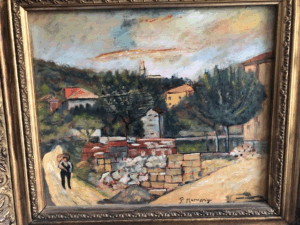
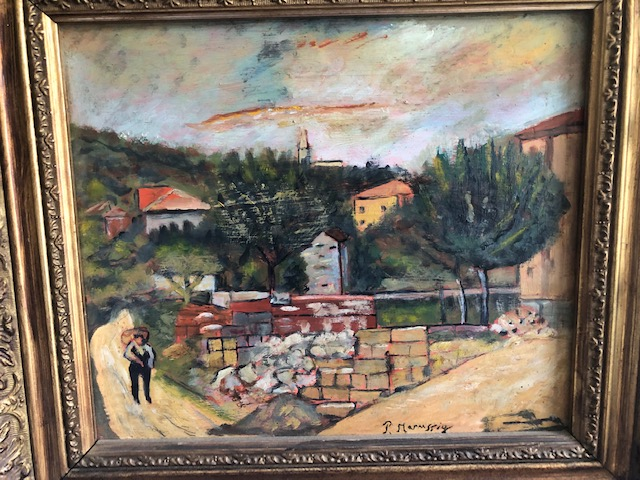
The Piero’s purity and the magical colours of the Trieste period matured after trips to Vien, Munich, Rome, Paris, is enclosed in the garden of the well – to – do bourgeois house where he drowned his life in melancholy by wine. In that garden the violets and lilacs of Munich ancestry which, after Paris , were lightened in the French blues of its views, rekindled in an expressionis explosion between 1912 and ’19, before leaving definitively for Milan in the new culture of a Return to Order, through the living room of Margherita Sarfatti.
Piero Marussig ( 1879 – 1937 ) unleashe a Franco – German symbiosis like few artists. He will always be conscious victim of an oxymoron: his serene unhappiness.
He participates in the group exhibition at the Galleria Arte in 1920, presented by Sarfatti, in which Sironi proposes urban landscapes for the first time. Meet new artists, in 1922 took part in the preamble on Novecento, with Bucci, Oppi, Funi, Dudreville, Sironi. He exhibits at large exhibitions of Novecento of ’26 e ’29 and the international ones to then close again, at the turn of ’30, when the Movement becomes State Art and less and less fascist, in the esacapes on the lakes with Arturo Tosi and in Liguria with the sculptor Francesco Messina, recovering the paintings of landscapes landed down from the Trieste period and sill lives.
In Marussig there is representation in representation , a visionary mixture of concrete objects and classical memories. The palette lowers the colour tones and the figures lose their outline, so much so that Sarfatti, satisfied, presents it in this way. Marussig progresses with sure tenacity towards the round abundance and sensitivity of the planes and penumbrae, typically Italian characteristics.